The thread through every role: a pull toward steep learning curves and a habit of leading the climb.
Otherwhere Capital
BMO Capital Markets
First Albany Corporation
Denver Public Schools
Currently a Guest Teacher in the DPS system. Teaching pulls on the same instinct as the work: take something complex, find the first principle, and make it usable. The most honest test of whether you understand an idea is whether you can hand it to someone else.
ICMA Exam Review Committee Member
Foundation Board Member & Investment Program Advisor
FSA Level II Subject Matter Expert
Institutional-grade analysis and insights, deepened and expressed through AI-powered tools.
IREN Valuation Analysis
view ↗IREN is two investments stacked: a data centre building, and a decision to fill it with hardware rather than lease it out. With a third of its capital in real estate and more than 80% of announced capacity still to be built, the market is paying for contract pricing less than where the company signs today.

What It Actually Takes to Trust AI-Built Analysis
view ↗An account of building an institutional-grade valuation model with AI, and of the eight times it was wrong. Not one was an arithmetic error. Every one was a claim about the output — a stale figure from an earlier build, a crossed reference, a share basis that didn't match the line beside it. What caught them was a regression harness, a second AI system with no stake in the first one's conclusions, and review. The work didn't shrink; it moved from construction to verification.
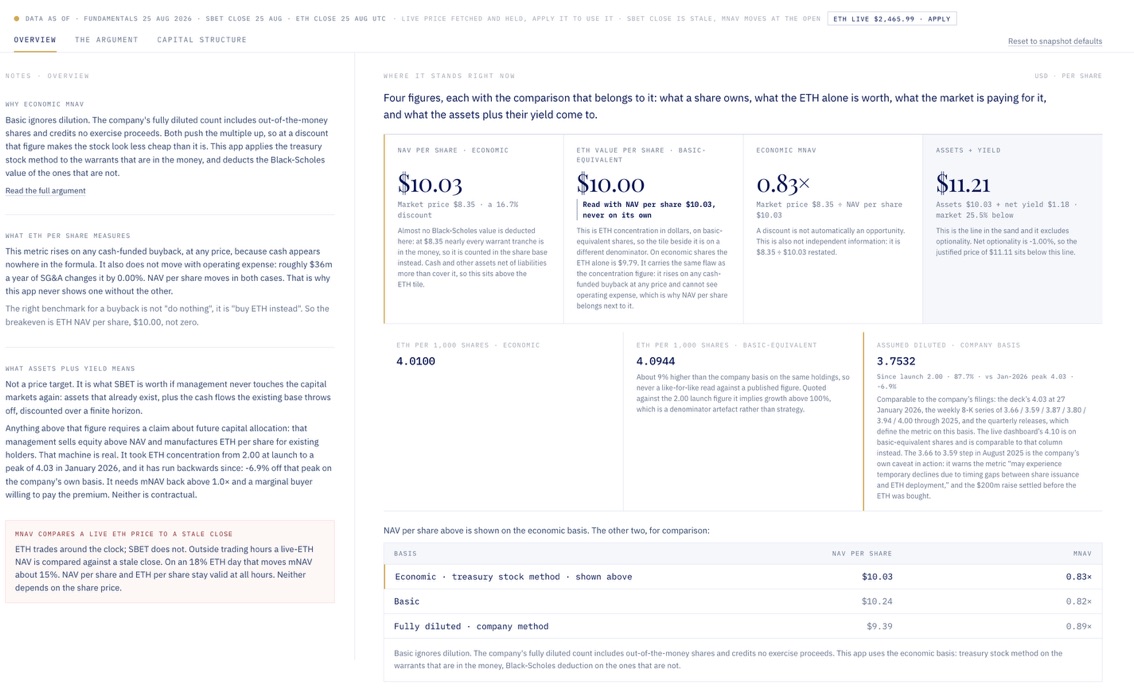
SBET Absolute Valuation
view ↗Digital asset treasury companies get valued on ETH per share, a metric that rises on any buyback at any price and never registers a dollar of operating expense. This model puts NAV per share beside it and prices the warrant stack properly — treasury stock method where warrants are in the money, a Black-Scholes deduction where they are not. The anchor is what SBET is worth if management never touches the capital markets again; everything above that line is what you are paying for the machine.
Best viewed on desktop
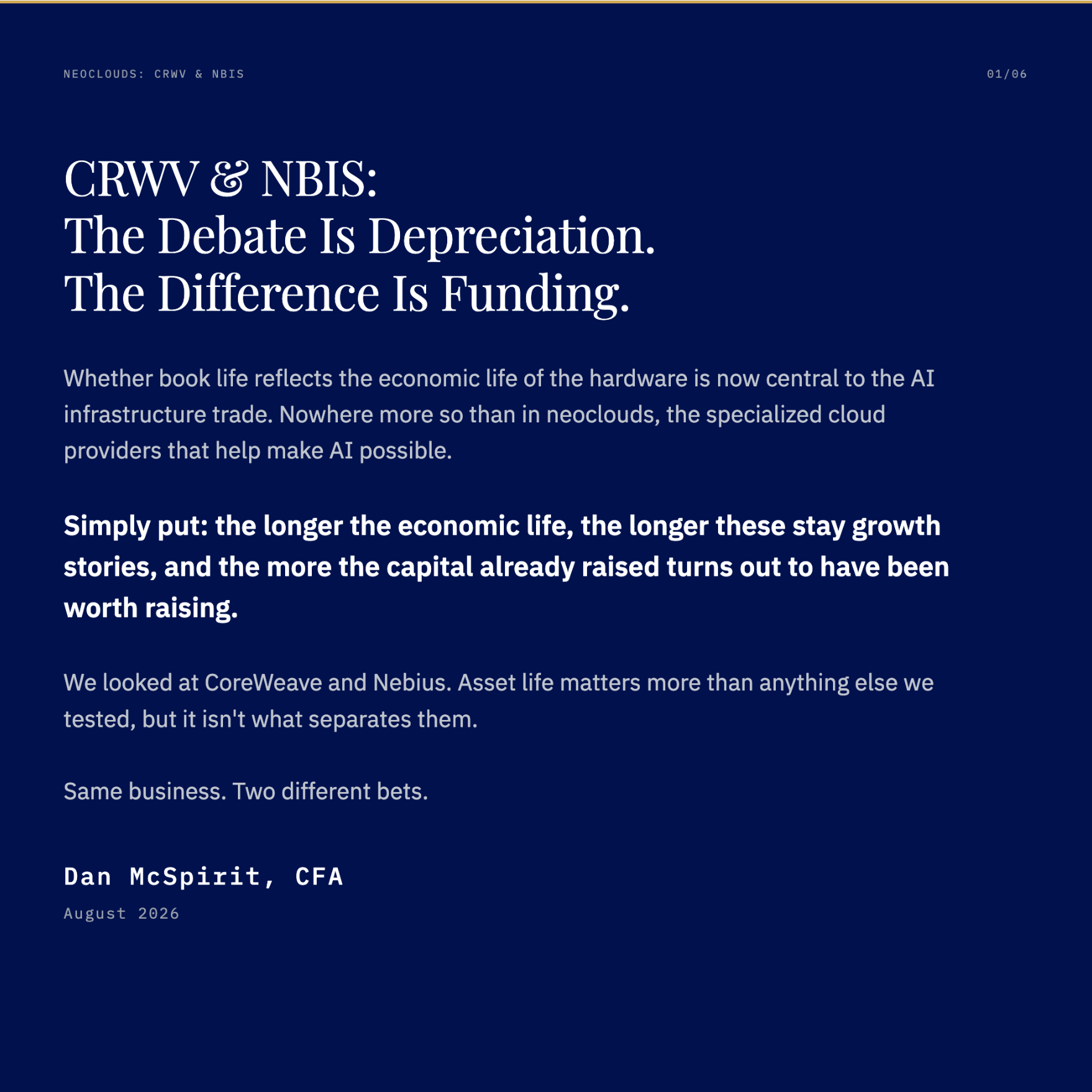
CRWV & NBIS: The Debate Is Depreciation. The Difference Is Funding.
view ↗Whether book life reflects the economic life of the hardware is now central to the AI infrastructure trade. Nowhere more so than in neoclouds, the specialized cloud providers that help make AI possible.
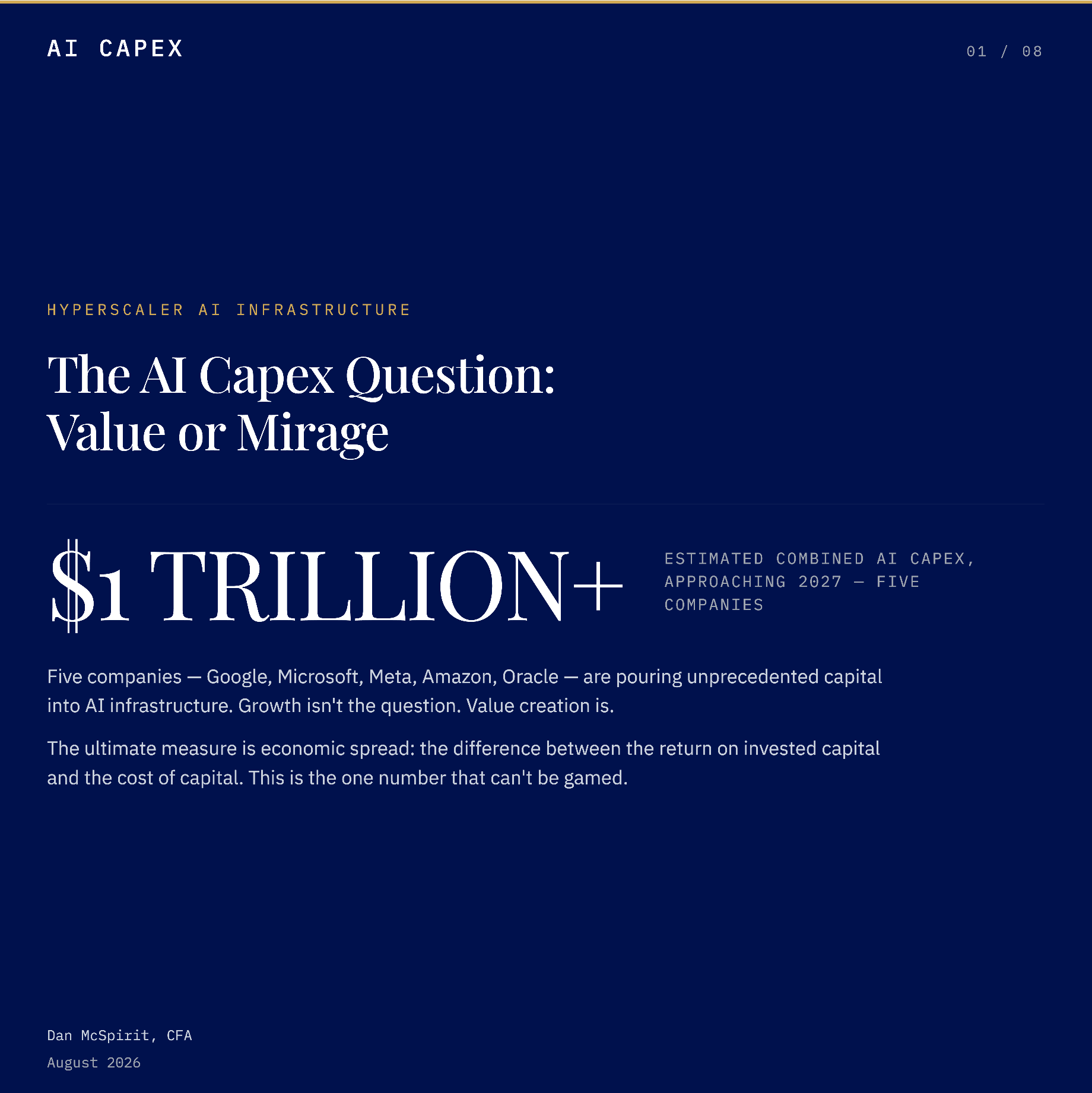
The AI Capex Question: Value or Mirage
view ↗Five companies — Google, Microsoft, Meta, Amazon, Oracle — are pouring unprecedented capital into AI infrastructure. Growth isn't the question. Value creation is.
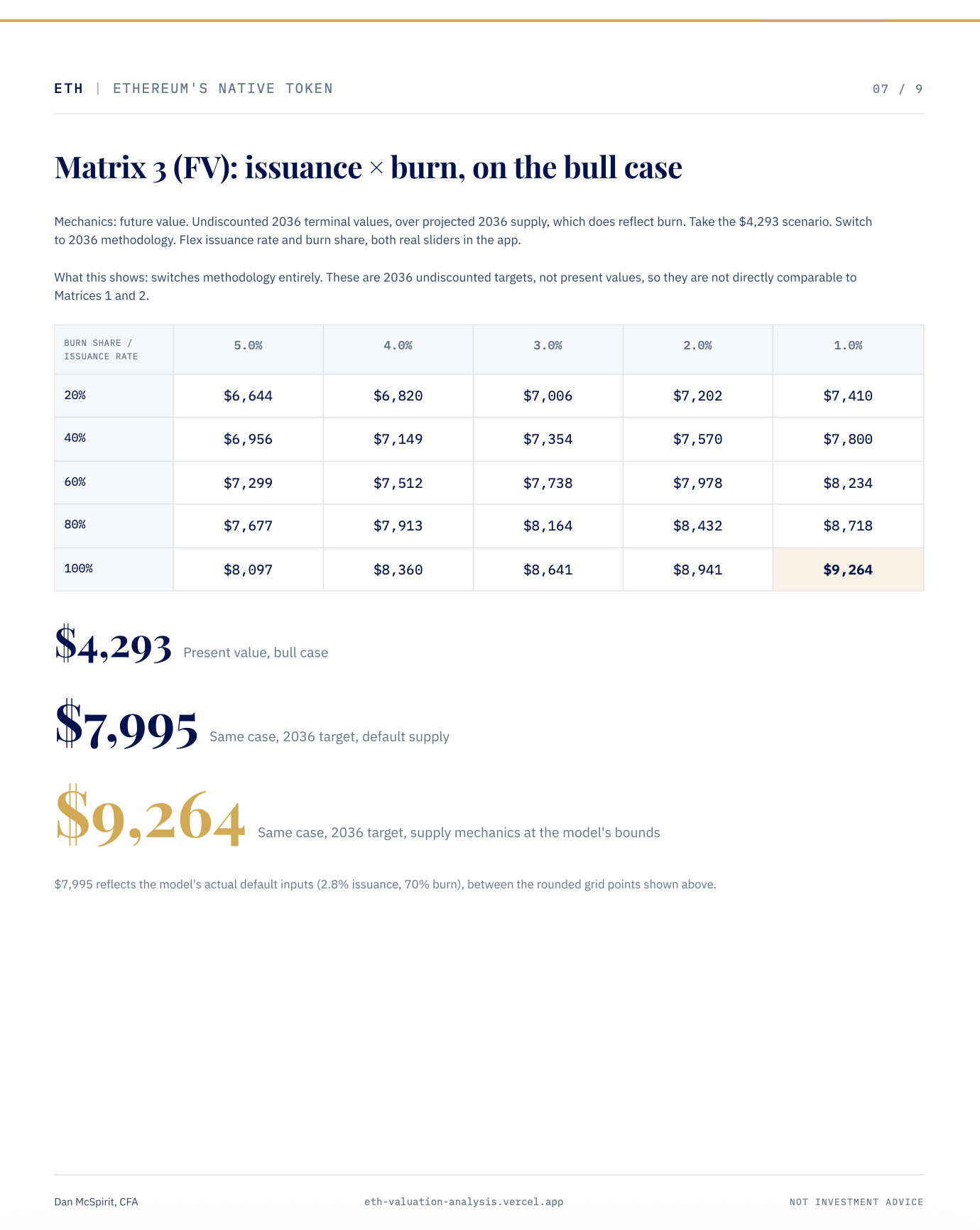
Valuing Ethereum: The Agentic Upside
view ↗Valuing Ethereum's potential in the agentic economy. Our approach is a five segment valuation model that treats ETH as programmable infrastructure. Includes sensitivities on what AI agent settlement could do to the valuation.
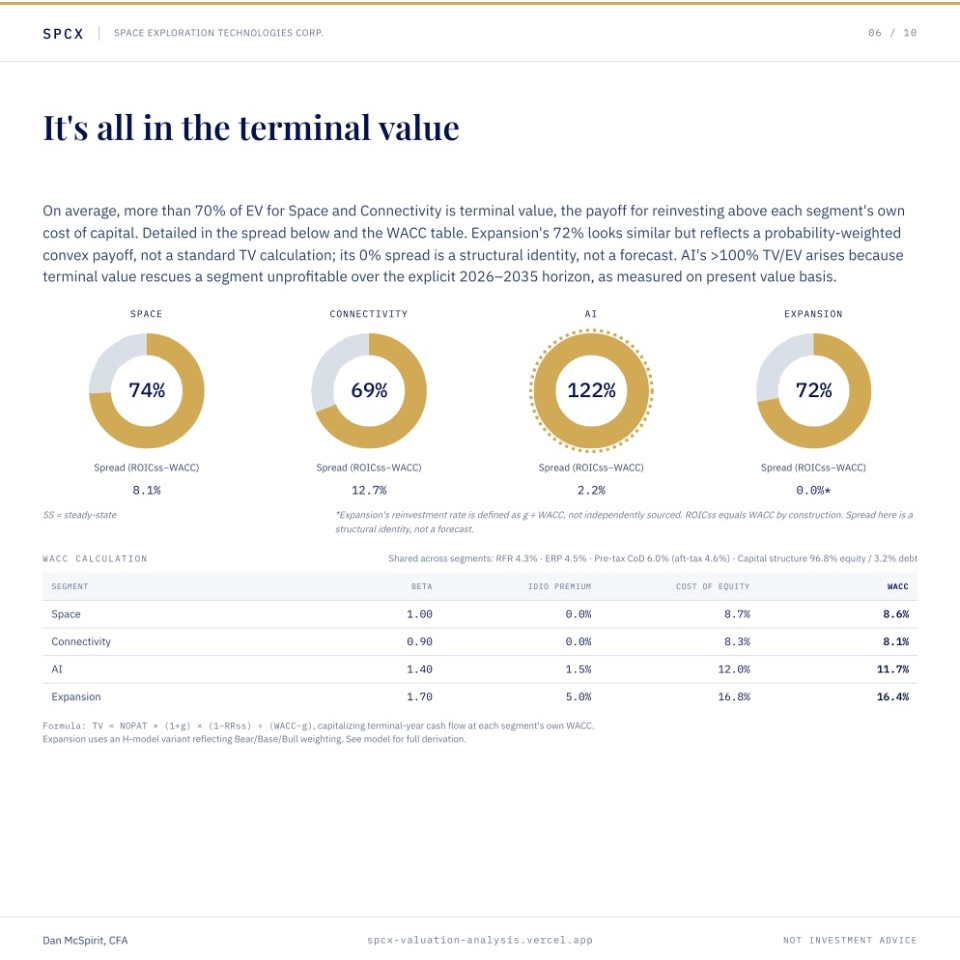
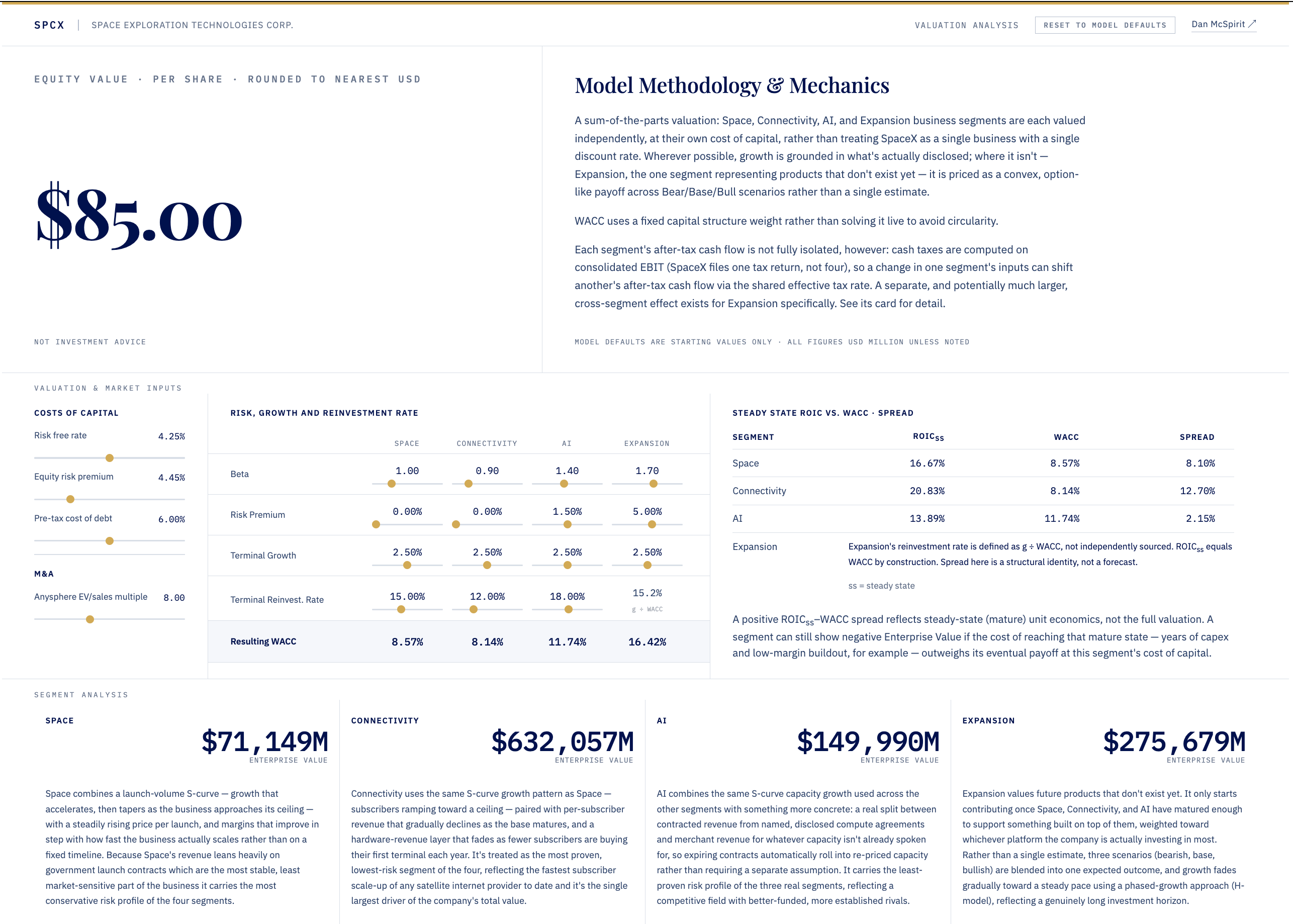
Valuing SPCX: Four Businesses, Four Costs of Capital
view ↗SpaceX is more than one business, and each carries its own risk. This presentation introduces a sum-of-the-parts valuation of Space, Connectivity, AI, and Expansion, each priced at its own cost of capital rather than blended into a single company-wide discount rate.
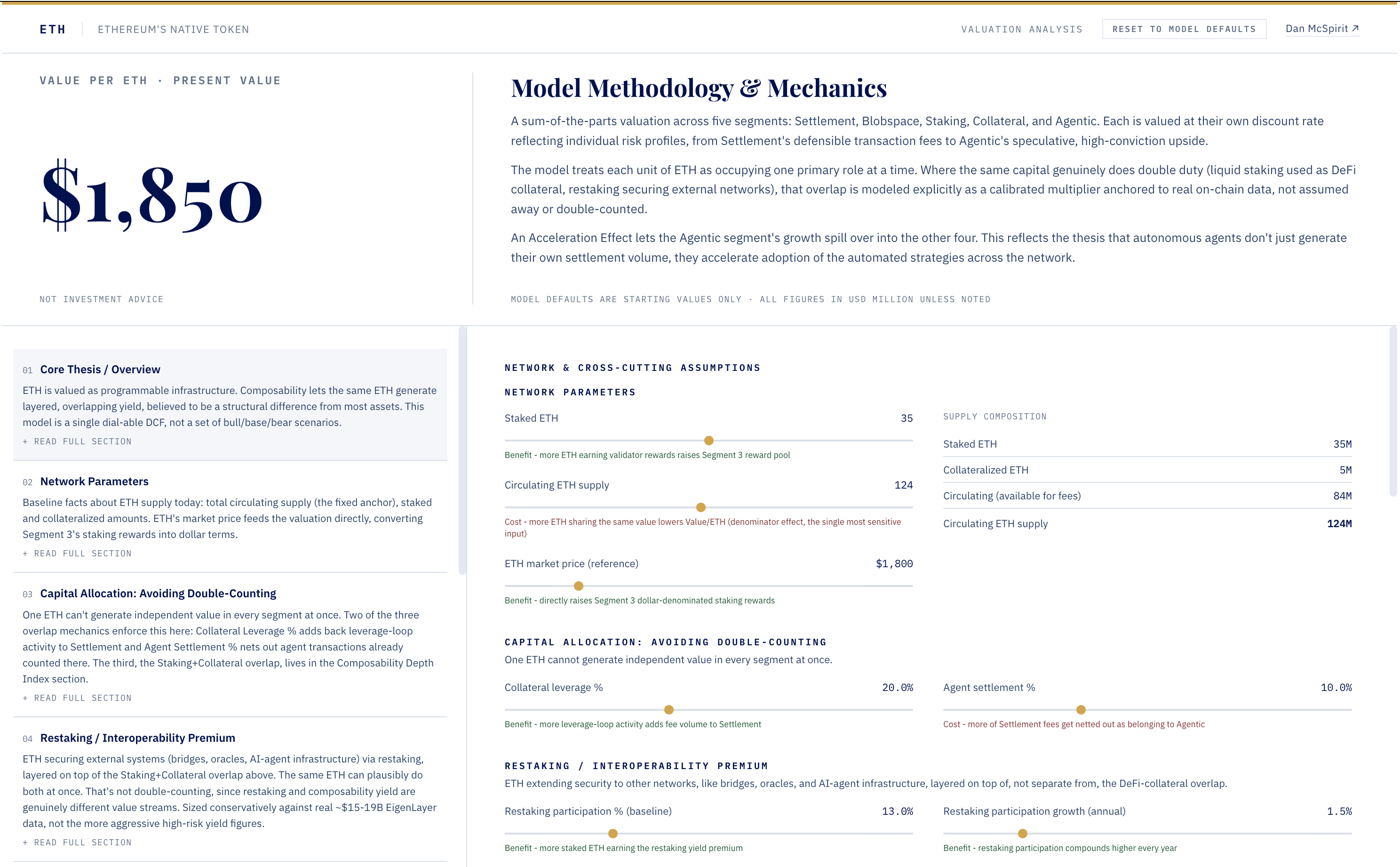
ETH Valuation Analysis
view ↗A sum-of-the-parts DCF that values ETH as programmable infrastructure, modeling composability, restaking, and agentic settlement as calibrated overlap rather than a comp-multiple guess. Built as a single dial-able valuation with no bull/base/bear scenarios. Simply adjust any assumption and watch one number, value per ETH, update live.
Best viewed on desktop
SpaceX (SPCX) Valuation Analysis
view ↗SpaceX defies a single valuation line. This sum-of-the-parts framework breaks the business into its constituent segments and lets you stress-test the assumptions that drive the range. Rebuilt from Excel into an interactive app you can actually challenge.
Best viewed on desktop
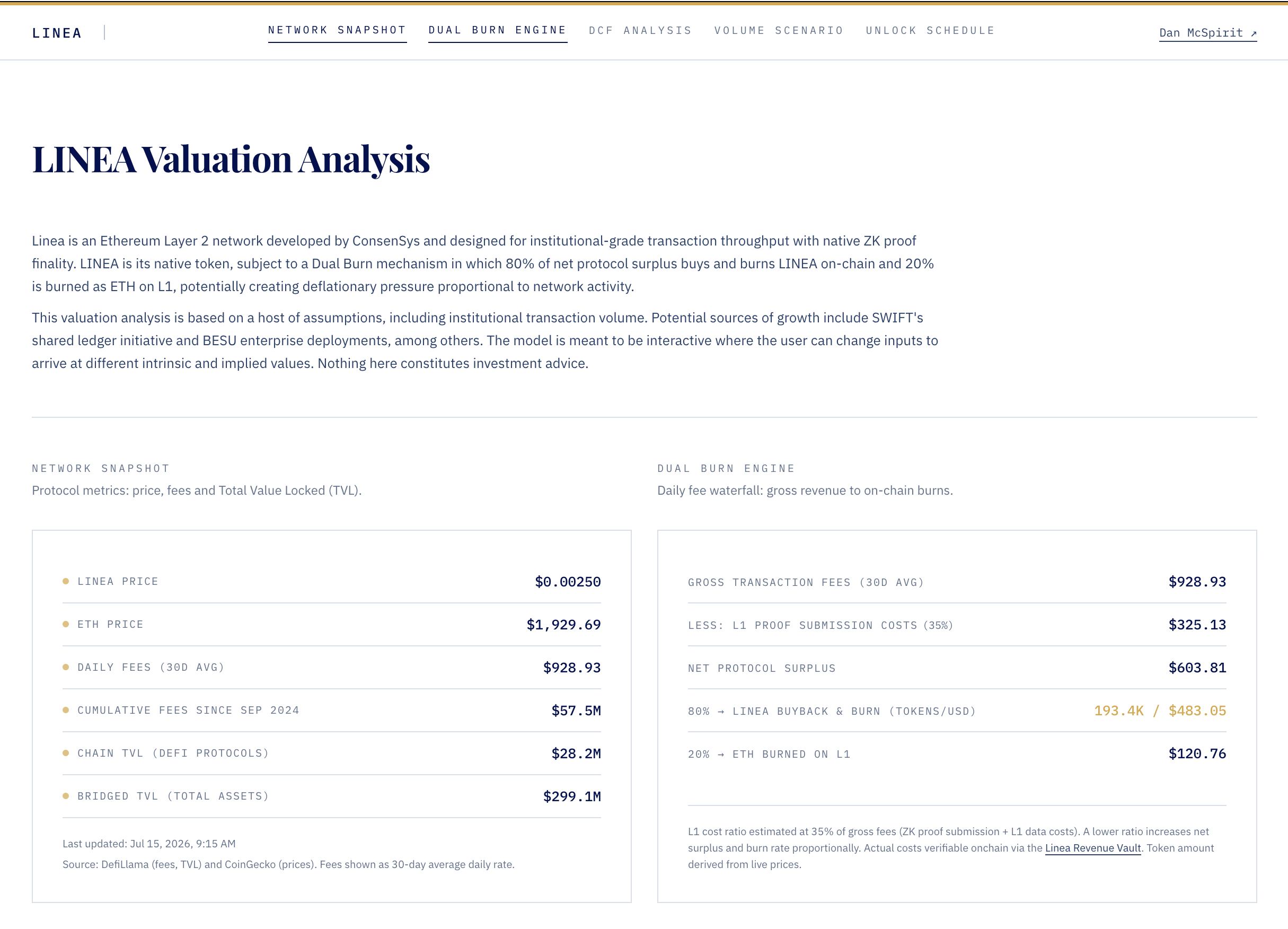
LINEA Valuation Analysis
view ↗A DCF and fee-multiple framework for the Linea protocol. This is the kind of model that usually lives buried in a spreadsheet, rebuilt as an interactive tool you can actually steer.
Best viewed on desktop
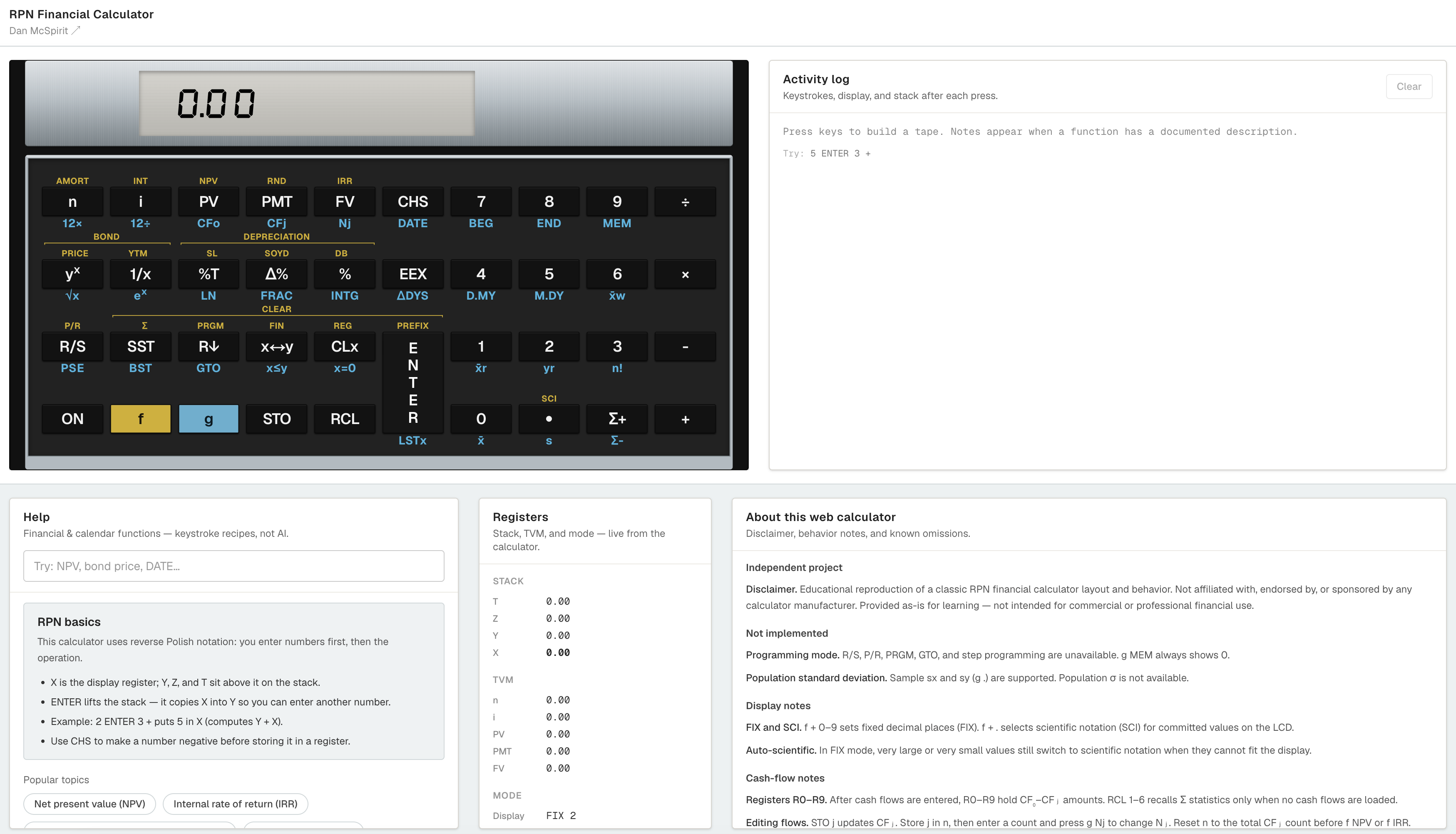
RPN Financial Calculator
view ↗A browser-based replica of the HP 12c RPN financial calculator, the desk classic a generation of analysts learned on, including yours truly, faithfully rebuilt for the web.
Best viewed on desktop